Abstract
In the fourth quarter of 2025, the East Bay industrial market experienced a decline in vacancy rates, sustained positive net absorption, and stable asking rents which increased marginally to $1.24 per square foot for warehouse buildings measuring 50,000 square feet or more.
East Bay
ECONOMY
In 2025, national employment in the warehouse and storage sector experienced a slight year-over-year (YOY) decrease. However, as of November 2025, approximately 1.8 million individuals are employed in this sector, marking a substantial increase of nearly 500,000 employees since 2020.
The modest reduction in warehouse and storage employment reflects decreased demand from retailers, a consumer preference shift toward services over goods, and a surplus warehouse capacity developed during the pandemic.
The reduction in workforce also reflects retailers streamlining logistics operations to adapt to shifting consumer behaviors, the ongoing expansion of e-commerce, and persistent challenges with high turnover driven by demanding working conditions.
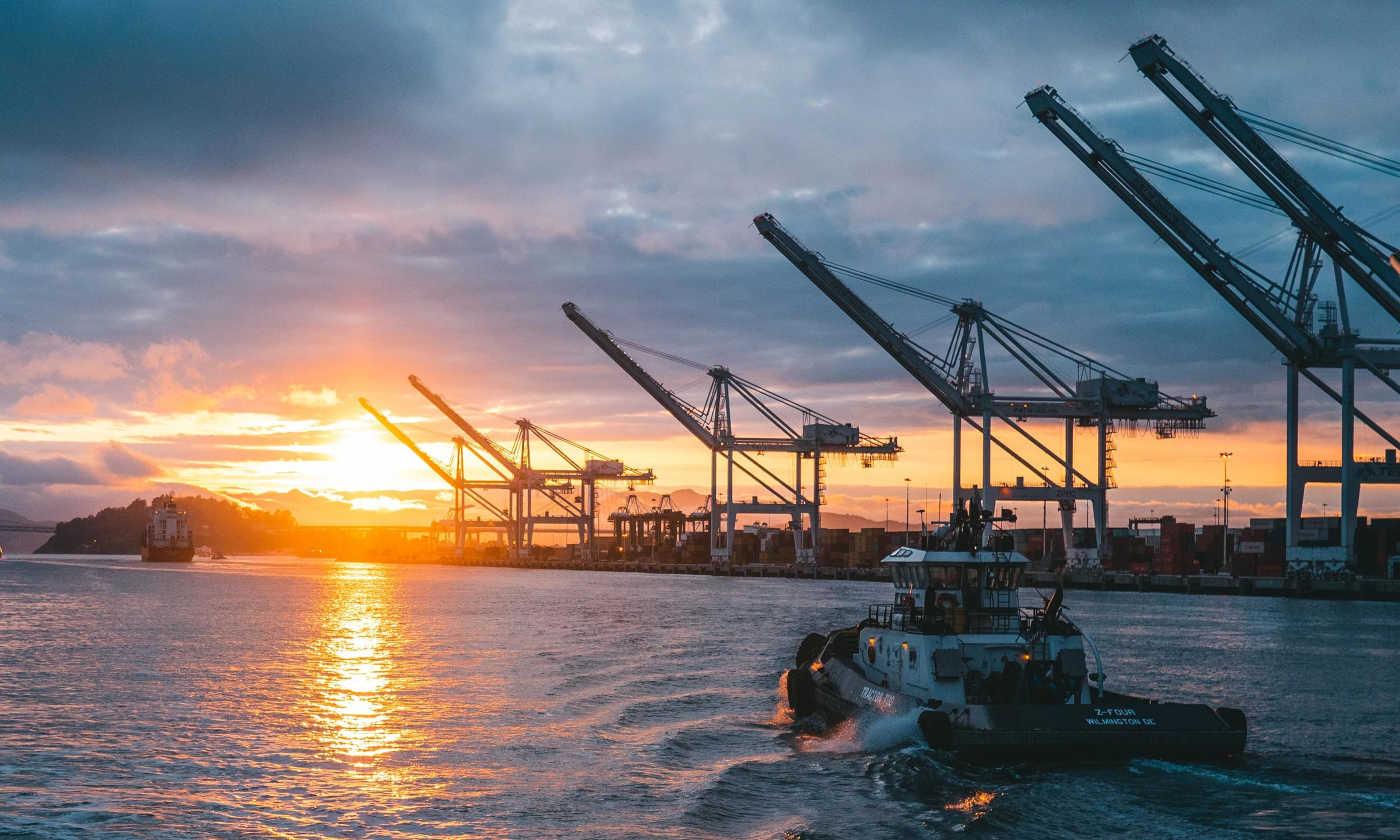
Port of Oakland container volumes have decreased slightly in 2025 compared to 2024. Import volumes in November experienced a YOY decline of 9.3%, due to typical seasonal slowing and continued adjustments being made by shippers in response to evolving tariff-related trade policies. Exports at the port handled 68,824 Twenty-Foot Equivalent Units (TEUs) in November 2025, a 3.3% YOY increase, indicating sustained demand from international markets.
VACANCY
The vacancy rate for warehouse buildings measuring 50,000 square feet (SF) or more has declined in Q4 2025 to 7.7%, down from 7.9% in the third quarter of 2025.
In Q4, sublease vacancy rates experienced a decrease of 80 basis points (bps) on a quarter-over-quarter (QOQ) basis, bringing the current rate to 0.7%.
With an abundance of available space options, landlords’ focus remains attracting and retaining tenants. They’re initiating conversations earlier in the lease cycle as well as offering compelling incentives such as enhanced tenant improvement packages, extended free rent periods, reduced security deposits, and demonstrating flexibility on lease terms. These measures create a unique opportunity for tenants to secure favorable agreements in a highly compeititve environment.
RENT
Average asking rents ended Q4 2025 at $1.24 per square foot (/SF) per month. Rents have marginally increased on a QOQ basis where rents settled at $1.23/SF in Q3 2025.
In Q4, landlords largely continued to hold firm on their marketed asking rents yet demonstrated increased flexibility during negotiations with tenants to secure occupancy.
With tenants benefiting from abundant space options and greater leverage, transaction rates declined even as asking rents remained steady. This trend has driven a growing gap between listing rates and finalized lease terms, with the spread widening QOQ throughout 2025.
DEMAND
Net absorption was positive in Q4 2025 at 252,200 SF. This figure marks two consecutive quarters of positive net absorption following a period of negative absorption in Q2.
The fourth quarter saw a sustained level of touring activity compared to the previous quarter. The busiest size segment for tours remained in the 25,000 to 50,000 SF range.
In Q4, demand for large industrial facilities, particularly those exceeding 100,000 square feet in the South 880 corridor, was driven almost exclusively by technology innovators, including robotics and AI firms, as well as advanced manufacturing companies. These users are prioritizing sites with heavy power capacity to support their operations.
Meanwhile, traditional warehousing, logistics, and 3PL tenants remain hesitant, constrained by rate sensitivity and unable to absorb new construction rents. Distribution focused companies continue to be highly price driven, further limiting activity in this segment.
Larger warehouse facilities continue to experience extended vacancy periods, with many sitting idle for months as demand for these oversized spaces remains limited.
Total leasing activity for Q4 2025 was 2.5M SF in buildings over 50,000 SF. This figure is currently above the leasing average from the last three years where the average quarterly leasing was 1.3M SF. Total leasing activity is down 300K SF QOQ where total leasing activity in Q3 totaled 2.8M SF.
CONSTRUCTION
Currently, 1.0M SF of speculative product is actively under construction, spread across three projects comprising a total of five buildings.
There is 2.7M SF of planned construction in various stages. Planned development activity suggests that developers are positioning projects to quickly meet evolving tenant requirements as market conditions stabilize and show signs of recovery.
Located at 43800 Osgood Road in Fremont, an 11.21-acre property, formerly home to Fry’s Electronics, features 143,795 SF of flexible space and is primed for redevelopment. The site offers an excellent opportunity to be transformed into a modern fulfillment center or logistics hub.
In Q4 2025, Phase 1 of Clarion Partners’ Campus @ Bayside was pre-leased to MiTAC, comprising of three buildings totaling approximately 253,472 square feet. The Campus @ Bayside is a six-building business park located in Fremont, with a total area of approximately 473,250 square feet. Phase 1 is currently under construction.
CAPITAL MARKETS
Capital markets remain selective but active, with expanded cap rates creating attractive entry points for well-leased, institutional-quality industrial assets.
Industrial fundamentals are normalizing, not deteriorating; vacancy has moved toward long-run averages as supply outpaced demand, while improving net absorption.
Industrial supply is already self-correcting, as slowing starts should allow vacancy to stabilize once recent deliveries are absorbed, reinforcing industrial’s relative defensiveness versus other property types.
NorCal vacancy is tightening modestly, with positive net absorption reversing prior quarters of demand softness as supply growth slows.
NorCal performance is bifurcated, with Bay Area infill corridors (I-80 / I-880 and Silicon Valley) benefiting from land scarcity and functional necessity, while inland big-box markets continue to digest excess supply.
Continue reading this report via the below PDF link.