Abstract
In the third quarter of 2025, the East Bay industrial market experienced a modest decline in vacancy rates, a substantial increase in total leasing volume, and stable asking rents, which remained unchanged quarter-over-quarter at $1.23 per square foot for warehouse buildings measuring 50,000 square feet or more.
East Bay
ECONOMY
In 2025, national employment in the warehouse and storage sector experienced a slight year-over-year (YOY) decrease. However, as of August 2025, approximately 1.83 million individuals are employed in this sector, marking a substantial increase of nearly 500,000 employees since 2020.
The slight decline in warehouse and storage employment is driven by lower demand from retailers, a consumer shift toward spending on services rather than goods, and an excess of warehouse space built during the pandemic.
The workforce reduction also reflects retailers optimizing their logistics operations in response to evolving consumer habits, the continued rise of e-commerce, and challenges with high employee turnover due to tough working conditions.
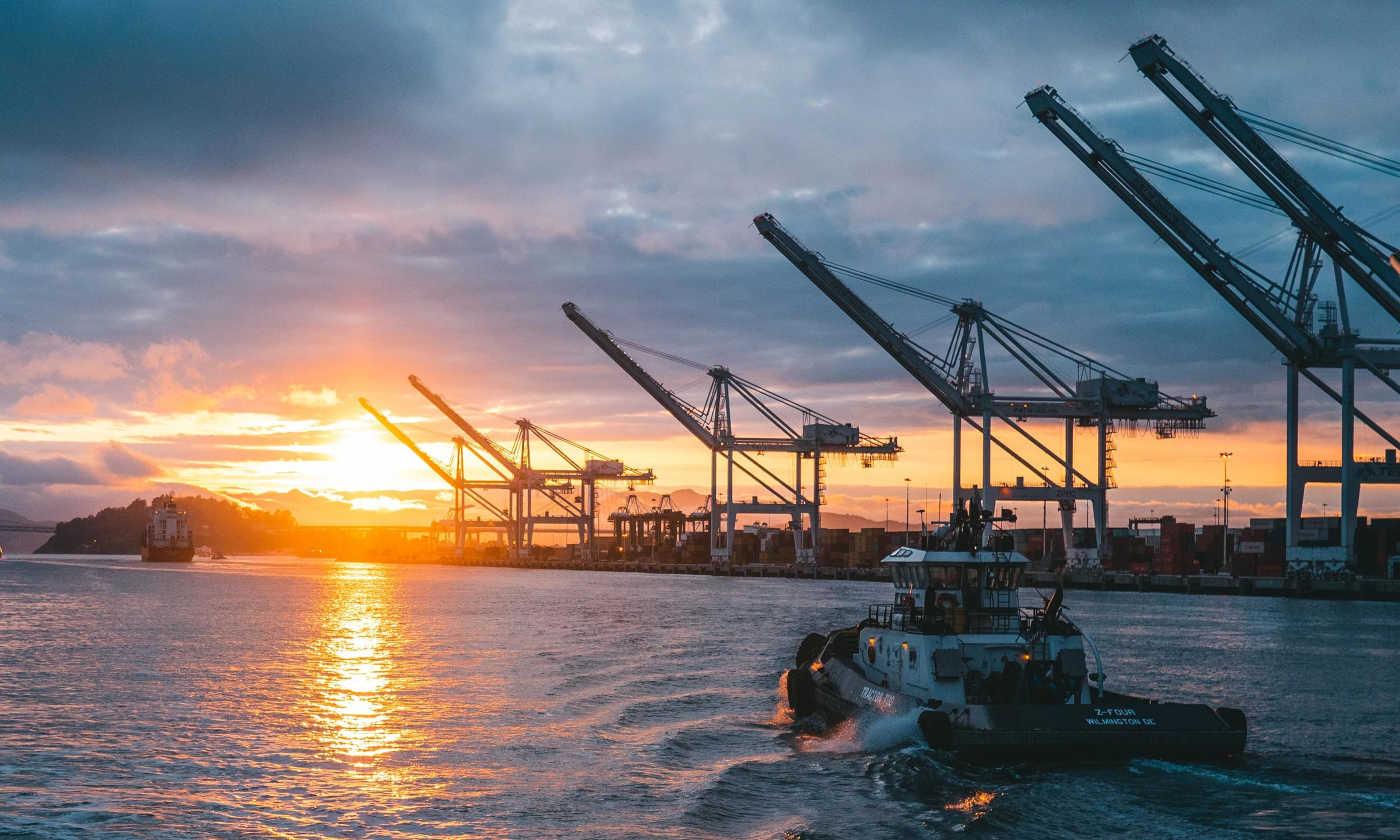
Port of Oakland container volumes have increased year-to-date (YTD) in 2025 compared to 2024, reflecting overall growth. However, import volumes in August experienced a modest YOY decline of 1.5%, likely due to ongoing adjustments being made by shippers in response to evolving tariff-related trade policies. Exports at the port handled 62,477 Twenty-Foot Equivalent Units (TEUs) in August 2025, a 5.2% YOY increase, indicating sustained demand from international markets.
VACANCY
The vacancy rate for warehouse buildings measuring 50,000 square feet (SF) or more has declined in Q3 2025 to 7.9%, down from 8.2% in the second quarter of 2025.
In Q3, sublease vacancy rates experienced a decrease of 10 basis points (bps) on a quarter-over-quarter (QOQ) basis, bringing the current rate to 1.5%.
With a surplus of available space options in the market, landlords are engaging tenants earlier in their lease cycles, contributing more tenant improvement dollars when necessary, offering extended free rent periods, reduced security deposits, and showing greater flexibility on lease terms.
RENT
Average asking rents ended Q3 2025 at $1.23 per square foot (/SF) per month. Rents have remained flat on a QOQ basis where rents settled at $1.23/SF in Q2 2025.
During Q3, many landlords continued to hold firm on their official marketed asking rents but were more willing to negotiate to secure occupancy in a market increasingly favoring tenants where they have more space options available to them and thus, more negotiating power. These negotiations led to a widening spread between the asking rent and the actual transaction price.
Class B warehouse facilities that have been vacant for extended periods are projected to face slight declines in asking rents throughout the remainder of 2025. This ongoing trend reflects a broader market dynamic observed in the first half of 2025 where available space in the market continues to outpace tenant demand.
DEMAND
Net absorption was positive in Q3 2025 at 356,481 SF. This positive shift follows a period of negative absorption in Q2.
Q3 saw a higher number of new leases compared to renewals, indicating a shift from last quarter where renewals were more prevalent. The turnaround in absorption in combination with increased new leasing activity indicates a potential resurgence in tenant activity and growing demand for industrial space, possibly driven by seasonal trends, economic stabilization, or strategic expansions by occupiers.
Q3 saw a slight uptick in touring activity compared to the previous quarter. The busiest size segment for tours was in the 25,000 to 50,000 SF range.
In Q3 there was notable demand and transacting on spaces over 100,000 SF, particularly across the 880 corridor from tech companies and advanced manufacturing users seeking high-power capabilities.
Major occupiers leasing over 100,000 SF in Q3 included Cal Cargo, Costco, IEM, Omni Logistics, Quanta Computer, and many other large-scale occupiers contributing to the overall influx in leasing activity this quarter.
Total leasing activity for Q3 2025 was 2.8M SF. This figure is currently double the leasing average from the last three years where the average quarterly leasing was 1.3M SF. Total leasing activity is up 1.4M SF QOQ where total leasing activity in Q2 totaled 1.4M SF.
CONSTRUCTION
Currently, 1.0M SF of speculative product is actively under construction, spread across three projects comprising a total of five buildings.
There is 2.7M SF of planned construction in various stages. Planned development in the market suggests that developers are positioning themselves to respond quickly to tenant requirements as market conditions stabilize and improve.
A key development this quarter was Clarion Partners breaking ground on Phase 1 of Campus @ Bayside, a six-building park in Fremont totaling 470,250 SF. Phase 1 is comprised of three buildings with a combined footprint of 253,472 SF.
CAPITAL MARKETS
Industrial property remains a core refuge for institutional capital, with investors favoring modern, high-spec logistics and distribution facilities over legacy or functionally obsolete assets.
Despite macro headwinds, pricing in many industrial markets has shown resilience, though transaction volume has softened amid tighter credit conditions.
The debt markets are more selective: capital is available, but lenders are scrutinizing cash flows, lease roll risk, and tenant stability more intensely than in prior years.
A wave of loan maturities over the next 2–3 years presents refinancing risk, putting pressure on owners to maintain strong operating performance and lender confidence.
Geographic and logistics fundamentals will drive returns: markets with constrained land, supply chain access, and population growth will outperform weaker submarkets.
Northern California continues to attract institutional capital thanks to its port access, tech-driven tenant base, and high barriers to new supply, positioning it as a long-term outperformer within the industrial sector.
Continue reading this report via the below PDF link.