Abstract
Houston’s vacancy rate held steady at 7.1% quarter-over-quarter. Net absorption remained positive at nearly 4M SF, consistent with last quarter. With rising construction and new deliveries, slowing demand could increase market pressure if it doesn’t keep pace with supply.
Houston
ECONOMY
The U.S. economy entered 2026 with meaningful tailwinds to growth including expanded business investment tax incentives, larger personal tax refunds, significant ongoing artificial intelligence (AI) related business investment, and hoped for reshoring related increases in domestic investment.
The first quarter’s average monthly employment growth increased to nearly 70,000, up from 20,000 during the same period last year, albeit with job growth highly concentrated in the healthcare sector and wage growth moderating.
Future economic growth depends on multiple factors including sustained job growth, sustained AI investment, increased domestic investment beyond AI, both trade and fiscal policy, favorable financial market conditions, and the Strait of Hormuz disruption with its varied potential impacts including on consumer spending power.
National warehouse and storage employment continued its downward trend, decreasing by 49,000 positions compared with the same period last year.
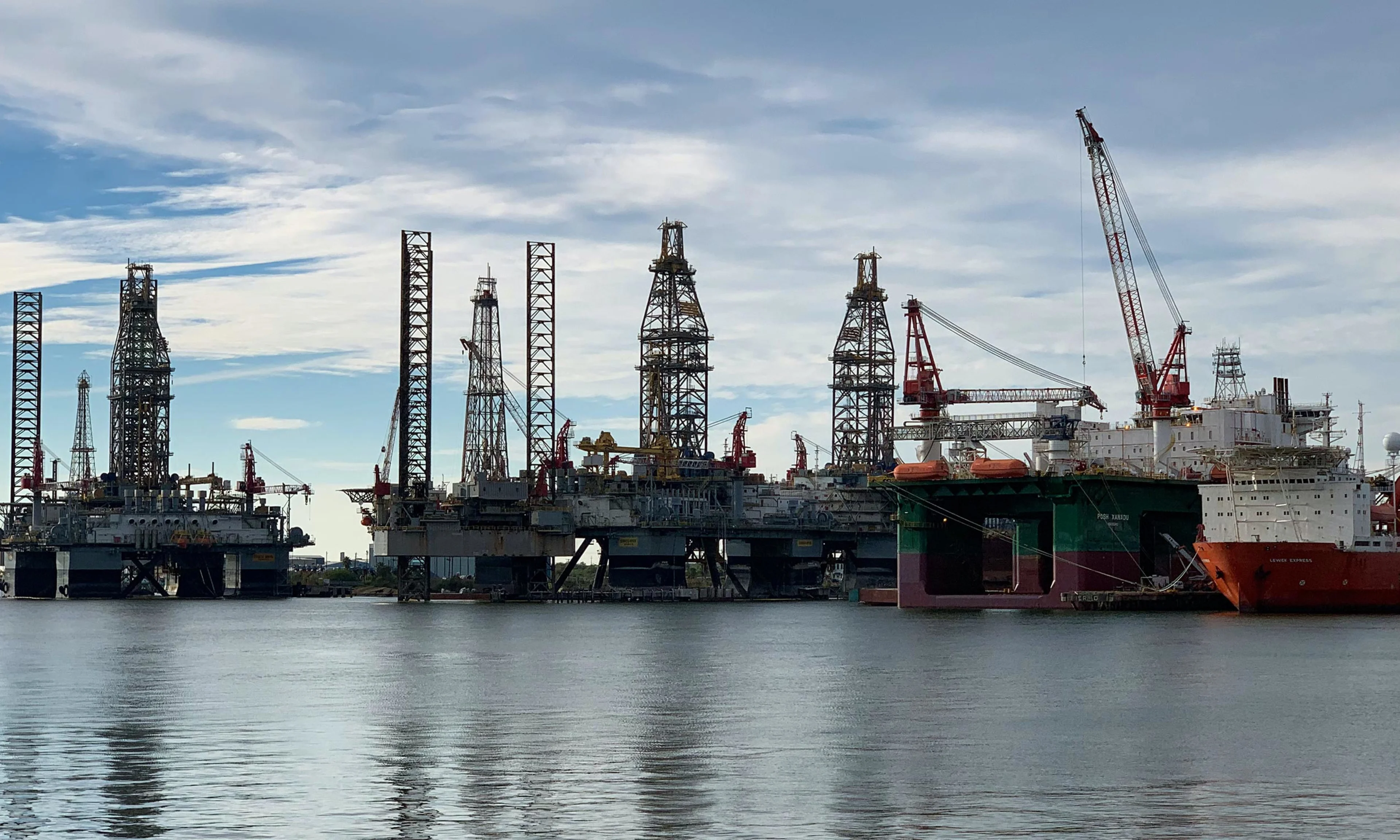
The Port of Houston plays a vital role in the economic strength of both Houston and the state of Texas. The Port handled 326,799 twenty-foot equivalent units (TEUs) in February, according to the Port of Houston, at similar levels compared to this time last year. Houston’s growth is closely linked to broader economic trends along the Gulf Coast. Manufacturing investment, petrochemical production, and nearshoring activity in Mexico have all contributed to rising trade flows through the Port. In addition, Houston’s location offers strategic access to both domestic distribution networks and Latin American markets.
Houston’s population grew 1.1% over the past year, adding more than 88,000 residents, and has increased 9.3% over the past five years, totaling over 740,000 new people, while remaining the fourth most populous city in the U.S..
WTI crude oil price reached $101.38 per barrel at the end of March, a 40% increase from this time last year. United States Rig counts remain at 543 as of the end of March, down 49 from this time last year. Natural gas prices decreased 30% from this time last year with the current figure at $2.88 per million British Thermal Units.
The conflict in Iran is contributing to increased volatility in oil and natural gas prices, which can drive higher activity levels among Houston’s energy-related users, including oilfield service providers, equipment suppliers, and port logistics operators. At the same time, ongoing supply chain uncertainty may encourage companies to maintain higher inventory levels, supporting demand for bulk warehouse space and industrial outdoor storage, while sustained energy price increases could pose risks to broader economic growth.
VACANCY
Houston’s overall vacancy rate began 2026 at 7.1%, rising 70 basis points (bps) year-over-year (YOY) and had no change from the prior quarter. This level remains 160 bps above the 5.5% long-term average, with direct vacancy decreasing 10 bps quarter-over-quarter (QOQ) to 6.8%.
The West submarket recorded the lowest vacancy rate at 5.1% and the strongest net absorption despite only accounting for only 6% of total inventory, highlighting exceptionally strong demand relative to supply.
The Southeast recorded the highest vacancy rate at 10.1% yet generated 2.0 million square feet (M SF) of leasing activity, more than 20% of the total leasing activity seen this quarter, suggesting active tenant demand even as available supply remains elevated.
With an expanding construction pipeline and recent deliveries combined with a slowdown in net absorption, overall market pressure may increase if demand does not keep pace with new supply.
RENT
In Q1 2026, 12-month market asking rent growth remained positive at 1.4%, bringing average rents across distribution, flex, and manufacturing buildings to $0.73 per square foot (/SF) per month. While still positive, growth has slowed from 5.4% in the previous quarter.
Rents in the Southwest, Northwest, and West are outperforming due to limited supply and strong fundamentals. The Northwest benefits from population growth, the Southwest from labor, tax, and Beltway access, and the West from excellent regional and multi-market connectivity.
Select deals continue to reflect higher tenant improvement allowances tied to unique tenant requirements, while free rent and annual escalation rates remain consistent with prior-year levels.
DEMAND
Net absorption remained positive in the first quarter of 2026, with nearly 4.0M SF absorbed. Activity was in line with the prior quarter and sits 2.8M SF above Q1 2025 level. Net absorption has increased consistently over the past four quarters.
Leasing activity remained in line with the prior quarter but declined nearly 14% YOY. The Northwest and Southeast submarkets recorded the strongest leasing activity in the first quarter, while the South and Southwest experienced more limited deal volume.
Buildings between 300,000-500,000 SF led the market with 2.1M SF of absorption. This represents the strongest demand threshold, signaling a healthy appetite for mid-to-large scale industrial space. Big-box demand for buildings greater than 750,000 SF more than 15% of total leasing SF, reflecting very large deal sizes and continued demand for big-box distribution space.
Crane-served manufacturing demand remains strong in the Houston market with limited availability for these facilities. As a result, speculative development is expected to increase over the next few quarters.
CONSTRUCTION
The construction pipeline for buildings 50,000 SF and greater continues to grow, with 23.3M SF currently under construction (UC) across 113 buildings.
A significant influx of capital, driven by Houston’s high desirability, has pushed the pipeline up nearly 60% since last year. We can anticipate for this to continue if the market continues to remain healthy.
Of the 23.3M SF currently UC, nearly 40% (44 projects) fall within the 150,000–300,000 SF range, primarily due to capital constraints and limited availability of well-located land. Large bulk projects (500,000+ SF) are becoming increasingly limited as demand for large-format space returns to the market. Currently, only two speculative developments are underway within this size range, a 677,220 SF building and a 1.0M SF building, both located in the Northwest submarket. As demand continues to strengthen at this threshold, developers are likely to initiate 500,000+ SF projects to meet anticipated tenant needs.
The market delivered 7.3M SF of new supply in the first quarter of 2026, a 3.3M SF increase from the previous quarter and a 5.2M SF increase from this time last year.
Houston’s strong fundamentals continue to support new development; however, close monitoring of supply levels will be critical to maintaining long-term market balance.
Data in this report was provided by KBC Advisors, St. Louis Federal Reserve, The Port of Houston, and CoStar.